Classical Liberal Reading Group
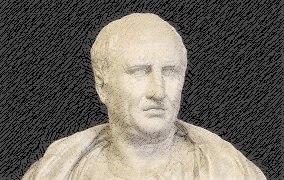
When a government becomes powerful it is destructive, extravagant and violent; it is an usurer which takes bread from innocent mouths and deprives honorable men of their substance, for votes with which to perpetuate itself. Marcus Tullius Cicero (106 – 43 BC)
The Timbro classical liberal reading group is part of Timbro’s educational program and has been active since 2015.
This December/January we will read one of the most read, most influential works of all time, Cicero’s On Duties (De Officiis). It is Cicero’s most famous work, by far. It was written in 44 BC, in under four weeks. Cicero was killed that year, 44 BC, at the age of 62.
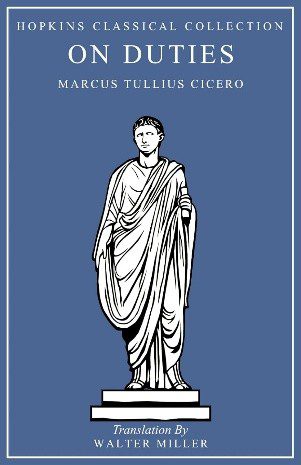
On Duties (Latin: De Officiis) was written in October–November 44 BC, in under four weeks. This was Cicero’s last year alive, and he was 62 years of age. Cicero was at this time still active in politics, trying to stop revolutionary forces from taking control of the Roman Republic. Despite his efforts, the republican system failed to revive even upon the assassination of Caesar, and Cicero was himself assassinated shortly thereafter.
De Officiis is an ethical treatise by the Roman orator, philosopher, and statesman Marcus Tullius Cicero written in 44 BC. The treatise is divided into three books, in which Cicero expounds his conception of the best way to live, behave, and observe moral obligations.
The work discusses what is good or right (Book I), what is good for the actor (Book II), and what to do when those two things seem to conflict (Book III). In the first two books Cicero was heavily influenced by the Stoic philosopher Panaetius, but wrote more independently for the third book. of sessions etc
Discussion leader: Daniel Klein
Meetings: Hybrid. Timbro, Kungsgatan 60, Stockholm, or Google Meet/Zoom.
- Session 1: 17 December, 17.30 – 19.00 (CET) Book I
- Session 2: 29 December, 17.30 – 19.00 (CET) Book II
- Session 3: 15 January (2026), 17.30 – 19.00 (CET) Book III
Apply
If you are interested in participating write an email to Björn Hasselgren bjorn.hasselgren@timbro.se. Shortly describe your background and tell why you would like to take part of the exercise. Apply by December 8, 2025. Also contact Björn if you have any other questions about the reading group, +46-708-236671.
Professor Daniel Klein, who will lead the Reading Group, is also available by email dklein@gmu.edu.
For those local to Stockholm, books will be provided by Timbro – check in with Björn Hasselgren about picking up a copy.
Some background materials for the Reading Group:
Videos:
His Year: Cicero (63 B.C.) by Historia Civilis
Cicero’s Finest Hour (44 to 43 BC) by Historia Civilis
A valuable discussion among three Cicero scholars —Jed Atkins (Duke), Michael Hawley (Houston), Matthew Mehan (Hillsdale)
(Cued up to start at 8:30.)
In particular, at the following starts a good 8 minute exchange about Cicero and originality.
David Hume on Ancient Revolutions
A short blog post by D. Klein, consisting chiefly of three paragraphs by Hume.
(Klein recommends that post because it helps us fathom the perilous world that a political figure like Cicero lived in—and died in.)